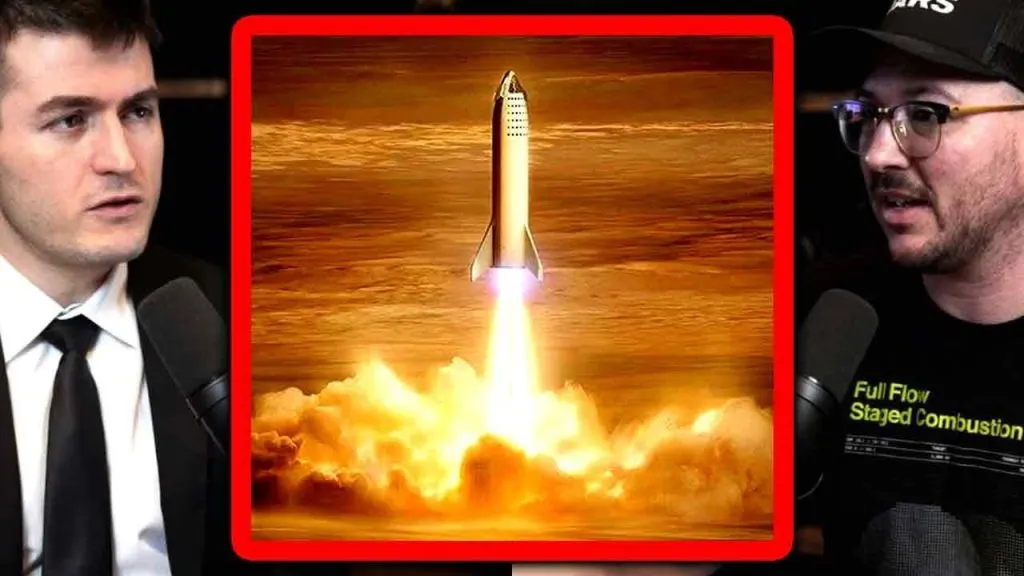
How Starship will land on Mars | Tim Dodd and Lex Fridman
👉👉TRY SHOPIFY FOR FREE👈👈
Shopify 60 day trial
-
Landing on Mars will require a combination of ultra-precise navigation systems, a series of thrusters, and advanced steering and guidance systems.
-
The Starship spacecraft will be equipped with several powerful thrusters that allow it to safely and accurately maneuver in a variety of directions and axes. The ship will have the capability to autonomously maneuver along and around the Martian terrain.
-
As it approaches the surface of Mars, Starship will autonomously examine the terrain, assess potential landing sites based on parameters such as approach angle and flatness of the landing surface.
-
After assessing the landing site, Starship will deploy its thrusters to slow down to a landing speed of about one meter per second. This will help the vehicle descend to the surface without risk of impact.
-
During the landing process, Starship’s damping system will adjust its thrusters to counteract the effects of turbulence and winds. This system will ensure that the lander’s courses remain consistent throughout the descent.
-
Using its advanced guidance systems and thrusters, Starship will autonomously control its position and speed as it descends towards the Martian surface. It will adjust its position to reach its landing coordinates and hover just above the surface.
-
Finally, Starship will use its final approach system to land on the surface of Mars. This system will precisely calculate the power and velocity of the thrusters in order to ensure that the lander reaches its landing spot safely and precisely.
👉👉TRY SHOPIFY FOR FREE👈👈
Read next
 Shopify
Etsy Shop Reviews #58: Beautiful Designs & Mockups… Only 6 Sales?!?
Shopify 60 day trial It’s difficult to get sales on Etsy in the beginning. You just need to keep putting out content and
 Shopify
Best Email Marketing App For Shopify | Full Guide
Shopify 60 day trial 1. Omnisend Omnisend is one of the most popular email marketing apps among Shopify merchants. With
 Shopify
iOS 14 Facebook Ads For Shopify Dropshipping | Master FB Ads In 20 Minutes
Shopify 60 day trial 1. Harness the Power of Lookalike Audiences: Lookalike audiences allow you to reach users similar t